
Free shipping On Most Orders Over $200

For a Nissan 350Z, forged wheels offer scope for lower weight, while well-designed cast wheels can work well for daily driving and performance use. The complete wheel-and-tire package matters more than the construction label alone.
When comparing forged vs cast wheels, account for brake clearance, offsets, and tire sizes alongside weight and design. Start with how each wheel is made, then match its specifications to your Z's intended use.
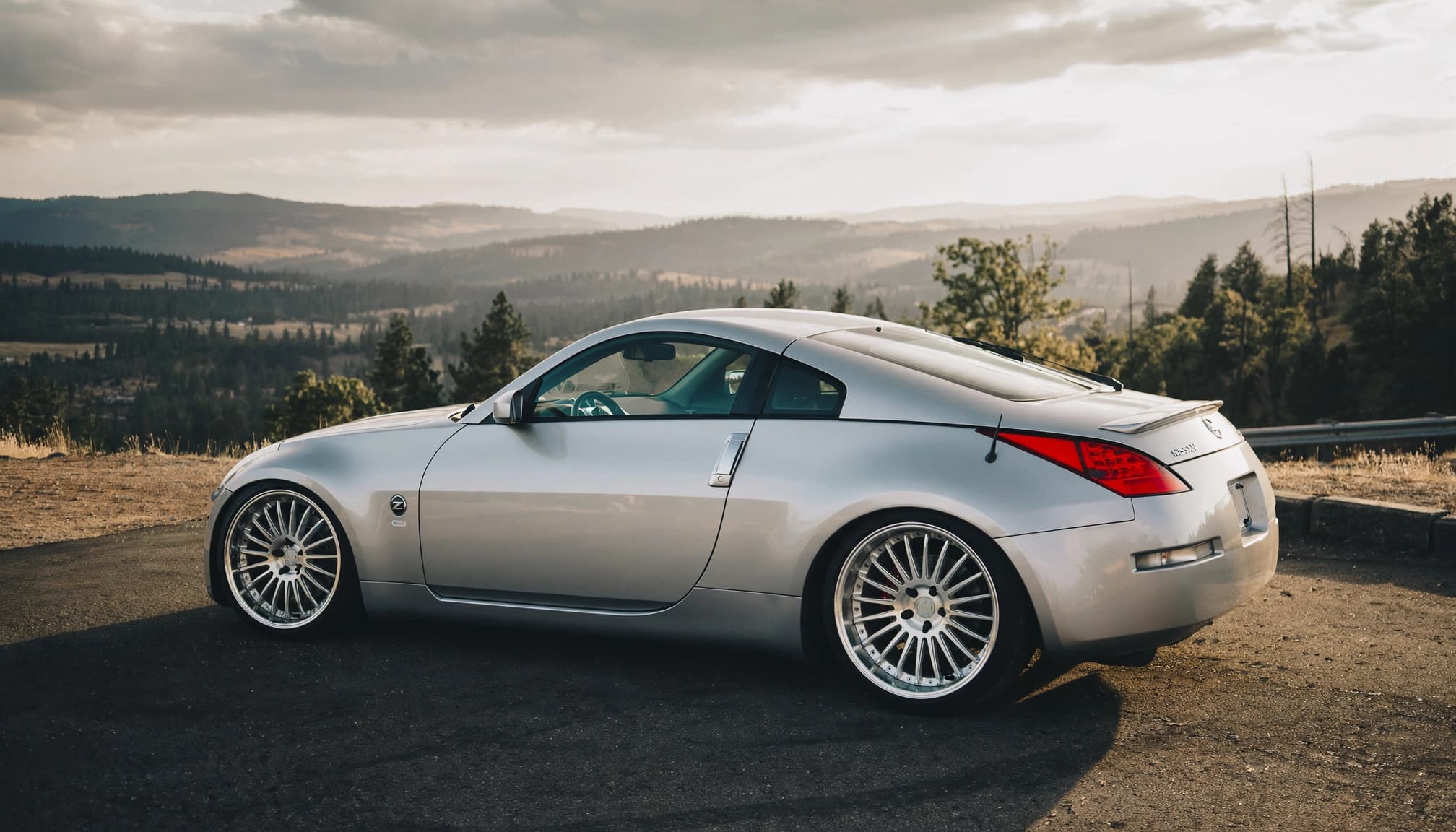
Casting starts with molten aluminum poured into a mold. The manufacturer then finishes and machines the wheel to its specified dimensions.
Forging shapes solid aluminum under substantial pressure before machining the wheel. The process changes the material's grain structure and can support designs that use less material for their required strength.
The 2022 paper Manufacturing Processes of Car Alloy Wheels discusses these manufacturing differences. For your 350Z, the useful distinction is the design freedom each process gives the manufacturer, rather than a blanket quality ranking.
Flow-formed wheels start with a cast wheel blank. Rollers then stretch and shape the barrel, changing that section's material properties. The center remains cast, so flow forming isn't the same as forging an entire wheel.
Enkei's MAT process combines casting and rim forming. Our 18x8.5 Enkei RPF1 wheel lists a 5x114.3 bolt pattern, +30 mm offset, and 73 mm bore.
That makes the RPF1 a concrete option to include when comparing 350Z wheels. However, those dimensions describe one specification, not every RPF1 or every possible Z fitment.
Wheels contribute to both unsprung mass and rotational inertia. Reducing their weight can help the suspension follow uneven pavement and reduce the effort required to accelerate or slow the rotating assembly.
Forging can allow a manufacturer to remove material while retaining the strength needed for the application. However, diameter, width, spoke shape, and load capacity also influence the finished weight.
Compare wheels in the exact sizes you're buying. An advertised weight for a narrow wheel doesn't describe its wider rear-wheel version. Also include tire weight, because wider rubber can offset some of the wheel's weight savings.
A wheel must withstand repeated cornering loads as well as occasional impacts. These are different demands, so one strength claim doesn't describe every failure mode.
SAE's work on wheel fatigue test specifications addresses standardized testing methods. Construction, geometry, material, and manufacturing quality all belong in the durability discussion.
For a track-driven 350Z, repeated loading makes fatigue performance important. On rough streets, tire sidewall and impact severity also matter. A forged wheel can still bend or crack, and a damaged wheel needs professional assessment regardless of its manufacturing process.
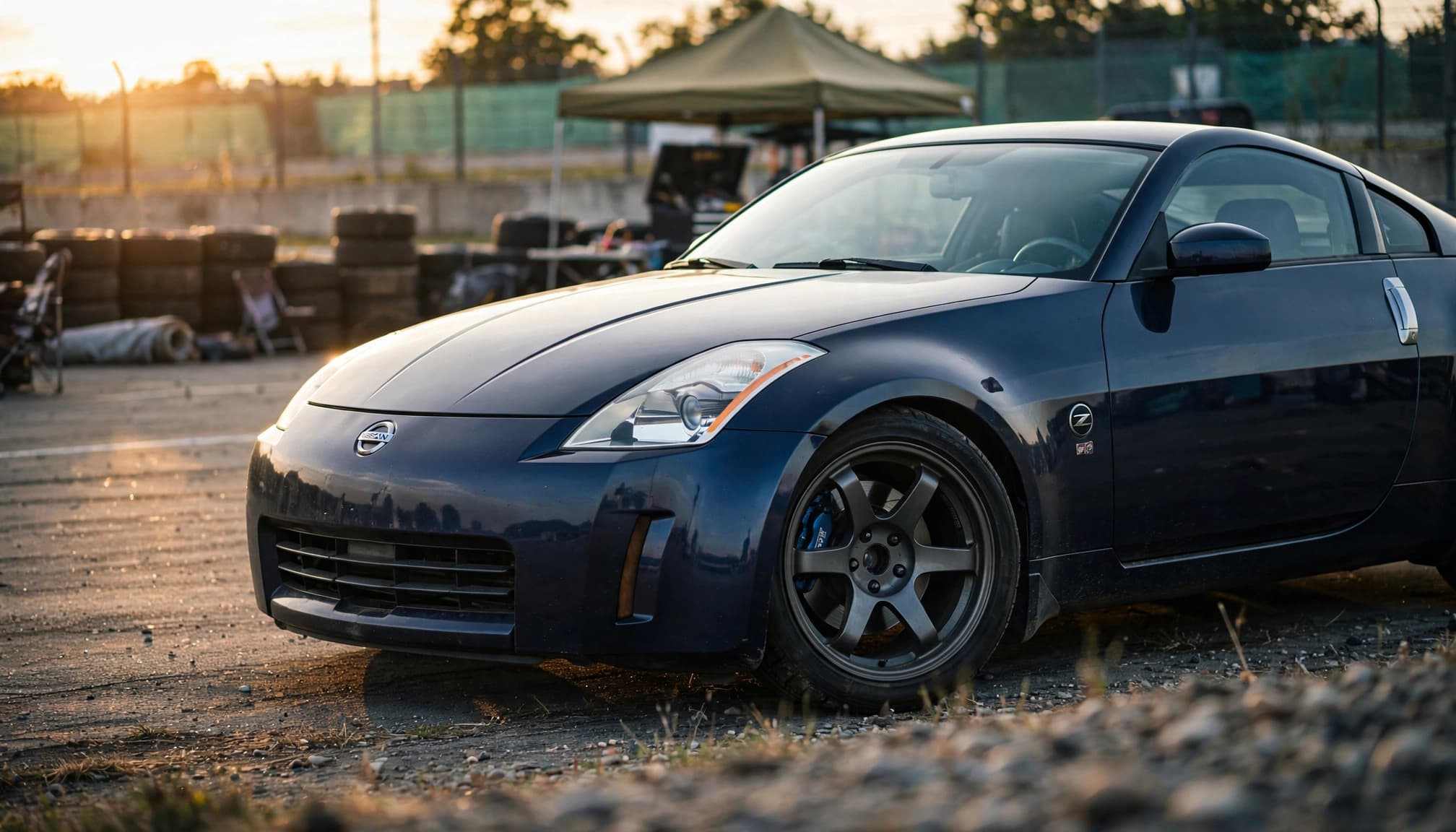
For a daily-driven Z, prioritize tire availability, ride comfort, and clearance through normal suspension travel. A well-designed cast or flow-formed wheel can suit that job.
Forged construction becomes attractive when the particular wheel delivers useful weight savings in your chosen dimensions. However, a large-diameter wheel with a short tire sidewall can make broken pavement unpleasant regardless of construction.
Track driving makes wheel weight and fatigue performance more relevant. However, tire grip, brake clearance, and appropriate load capacity remain part of the decision.
A lightweight forged wheel can suit a focused 350Z build. A suitable cast or flow-formed wheel can also make sense when tire replacement and other consumables dominate the budget.
For repeated track use, a readily available replacement wheel is valuable. Matching dimensions matter when you need to replace one damaged wheel rather than an entire set.
For a show-focused 350Z, spoke shape, lip depth, finish, and wheel position often drive the purchase.
Forged monoblock wheels can offer detailed machining and open spoke designs. Cast wheels also provide many face styles and finishes. Meanwhile, multipiece construction adds another design choice, but it doesn't automatically describe how every component was manufactured.
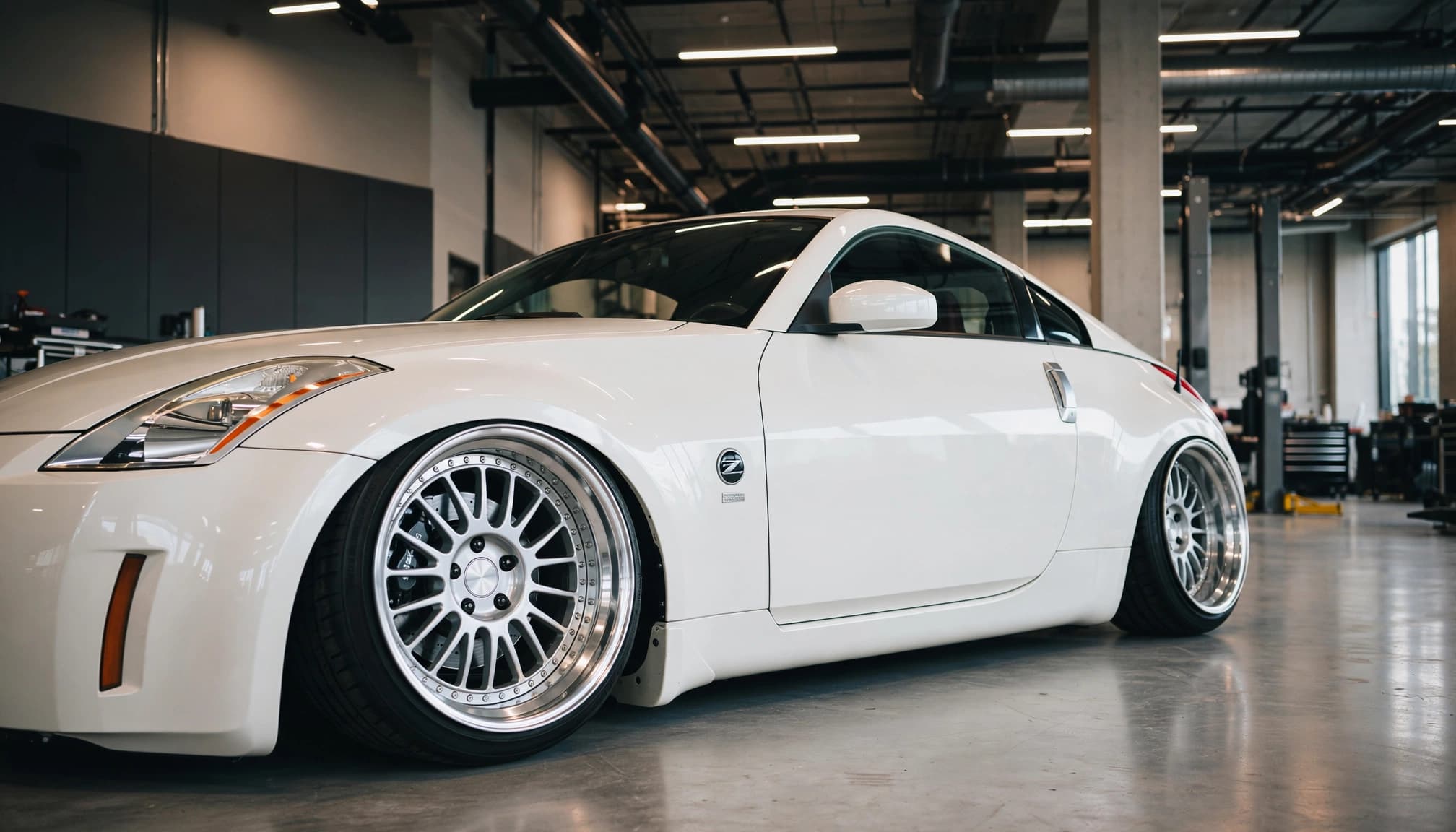
The 2003 Nissan 350Z wheel specifications include both 17- and 18-inch configurations. Those figures describe that model year's listing, rather than every year and trim.
For aftermarket builds, 18-inch wheels provide a practical balance of tire sidewall and performance-tire options. A 19-inch setup gives a different visual proportion but generally needs a shorter sidewall to retain a similar overall tire diameter.
Width should follow the tire and intended use. Excess width can create clearance problems without adding useful grip. Tire manufacturers' approved rim-width ranges define which wheel widths suit each tire.
Offset measures the mounting face's position relative to the wheel centerline. At the same width, a lower positive offset moves the wheel outward. A higher positive offset moves it inward.
Width changes both inner and outer clearance, so offset alone can't describe fitment. A wider wheel may approach the suspension even when its outer face looks right.
Spacers also change effective offset. Our 350Z Eibach spacer kit adds 10 mm per side and requires replacement of the original studs with the included longer studs.
A 10 mm spacer moves the wheel outward 10 mm and reduces effective positive offset by 10 mm. It also reduces available outer-fender clearance.
A parked 350Z doesn't reveal its full clearance requirements. The front tires sweep through an arc during steering, while bumps move both front and rear tires upward.
Lowering the car reduces available space. Alignment settings also change tire position, and different tire models can have different shoulder shapes despite sharing a nominal size.
Account for the complete tire envelope at steering lock and suspension compression. On staggered setups, front-to-rear rolling circumference also matters to the car's electronic systems. Similar-looking sidewalls don't establish that relationship.
The 2003 350Z hub dimensions list a 5x114.3 bolt pattern and 66.1 mm center bore. These are separate measurements from wheel width and offset.
A larger aftermarket center bore may require an appropriately sized hub-centric ring. Lug nuts must also match both the stud thread and the wheel's seating design.
Meanwhile, Brembo-equipped 350Zs need suitable spoke-to-caliper clearance. Wheel diameter alone doesn't establish that clearance because spoke profile and mounting-pad geometry vary. The same applies to an aftermarket big-brake kit.
The wheel price is only one part of your 350Z's total. Tires, mounting, balancing, compatible hardware, and any necessary hub rings belong in the same budget. Suspension or alignment changes add further expense when the proposed fitment requires them.
Keep the performance and appearance decisions separate. A finish upgrade changes appearance, while a width change can affect tire choice and clearance. Neither automatically delivers a handling improvement.
For a show-oriented build, our three-piece Orden CV wheel options offer custom widths, offsets, and finishes. The listing includes widths between 7.5 and 12.5 inches, but that range isn't a recommendation for a 350Z.
Multipiece construction and forged construction describe different things. One describes how the wheel is assembled; the other describes a manufacturing process. Treating those terms separately makes wheel descriptions much easier to compare.
For a street-and-track Z, put suitable tires ahead of cosmetic extras. For a show car, budget for the finish and dimensions that deliver the intended appearance without tire interference.
Yes. A square setup uses the same wheel and tire dimensions at all four corners. It can allow front-to-rear tire rotation when wheel offsets, tire direction, and the complete fitment permit it.
However, front clearance can limit the package. A width that fits the rear doesn't automatically fit the front suspension or clear the fender during steering. Tire diameter also needs to suit the car's electronic systems.
They may. The lug nut's seat must match the wheel, and its thread must match the 350Z's studs. Some aftermarket wheels also have narrow lug recesses that require a suitable slim-profile nut.
Factory lug nuts aren't automatically suitable simply because they thread onto the studs. Correct engagement and unobstructed seating are necessary for proper clamping.
The forged-versus-cast decision works best after you've defined your 350Z's tire size, driving use, and fitment requirements. Forging can support a lightweight performance build, while suitable cast and flow-formed designs remain practical options.
Our recommendation is to prioritize fitment and the complete package. A wheel that clears the brakes, supports the right tire, and suits your driving gives you more than a construction label alone.