
Free shipping On Most Orders Over $200

Yes, you can reuse OEM GR Corolla TPMS sensors with aftermarket wheels if the sensors are in good condition and the new wheels accept their valve-stem design. The original sensors also need to be removed and installed without damage.
For most owners moving their existing sensors to a new wheel set, sensor registration is already handled because the car recognizes those IDs. Wheel fit and the installation itself are the first things to consider.
Transferring the factory sensors is a practical choice when you're replacing your wheels and won't need the original set ready to drive. The sensor stays with the valve stem, so the tire must come off the old wheel before the assembly can move to the new one.
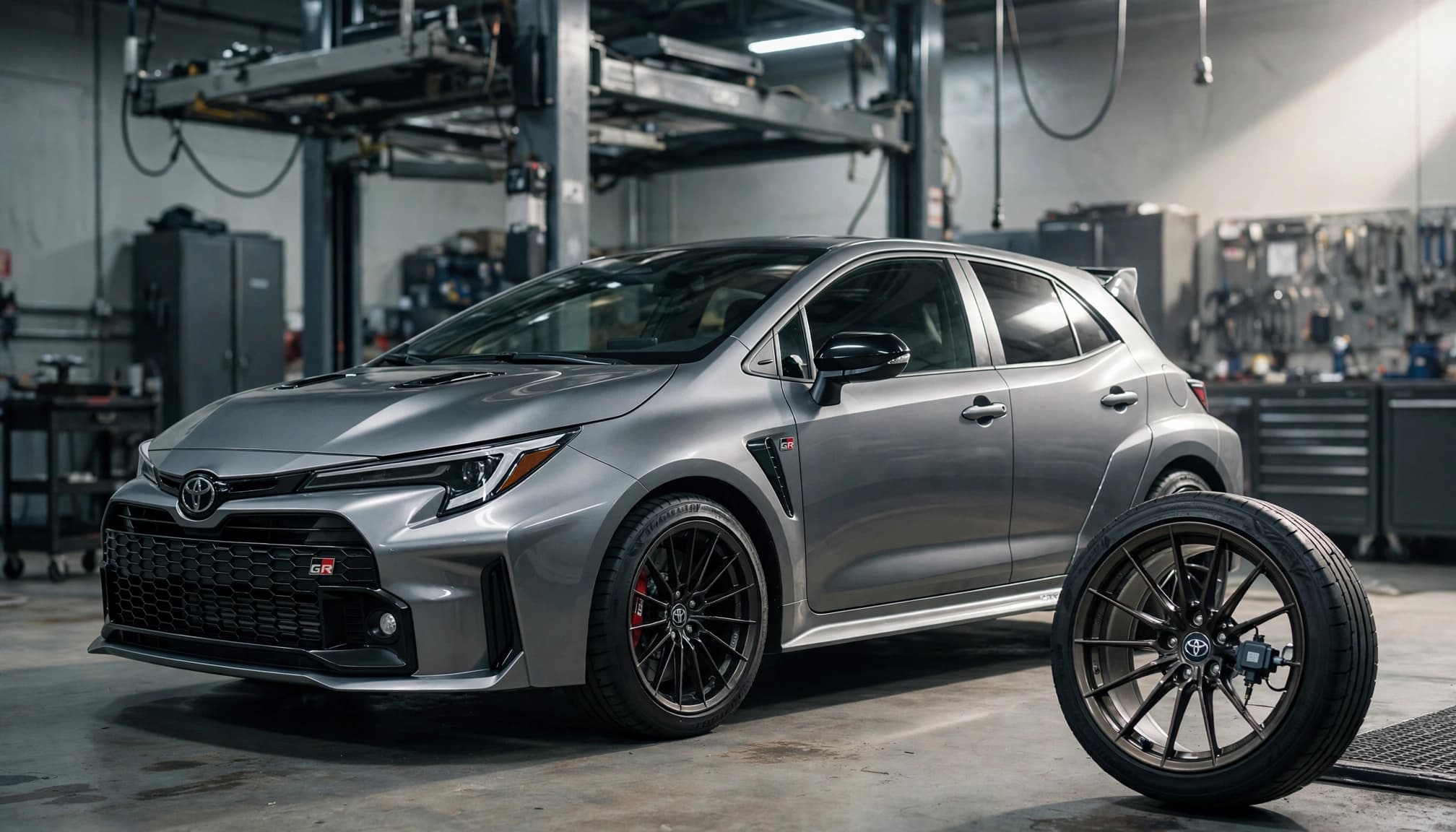
The GR Corolla uses sensors inside the wheels to report tire pressure to the vehicle. Changing the wheel doesn't automatically mean changing the sensor, but aftermarket wheel designs differ. A sensor that fits the factory wheel won't necessarily fit every replacement.
When browsing aftermarket wheels, consider TPMS fit alongside the usual wheel fitment requirements. A wheel also needs appropriate brake clearance, offset, mounting hardware, and tire sizing for your car.
The sensor and wheel need to fit together physically before registration becomes relevant. Pay attention to both the valve opening and the space inside the wheel.
The wheel's valve opening must accommodate the factory stem and allow it to seal properly. The shape around that opening matters too: a recessed or unusually angled valve seat can affect how the stem sits.
Some aftermarket wheels use a different valve arrangement or require hardware made for that wheel. In those cases, the factory assembly may not be a suitable fit. A tire installer familiar with TPMS can assess the parts before mounting the tire.
The sensor body sits inside the wheel, where the tire machine and tire bead can contact it. It needs enough room to sit in its intended position without interference.
A wheel's bolt pattern alone won't tell you whether the sensor fits. Likewise, a wheel that clears the GR Corolla's brakes still needs a compatible valve opening and enough room for the sensor.
A sensor can be compatible with the new wheel and still need replacement because of damage or age. Cracks, corrosion, a damaged stem, or a sensor that doesn't transmit are reasons to replace it rather than transfer it.
The sensor's internal battery also has a limited life. If the battery has failed or is close to the end of its life, replacing the assembly while the tire is off can save another tire removal later. An installer can use a TPMS tool to test whether each sensor responds before the transfer.
Sealing parts matter as well. Depending on the stem design, the appropriate service parts may include a valve core, seal, or stem. Have the installer use the correct service components rather than assuming the old sealing parts should go back in unchanged.
A tire shop removes the tires from the factory wheels, transfers the sensor assemblies, and mounts the tires on the new wheels. The installer should take care around each sensor when breaking the bead and operating the tire machine. A damaged sensor can turn a straightforward wheel swap into another trip to the shop.
After mounting, the tires need to be inflated to the pressure appropriate for the vehicle and its setup. The installer can also test for leaks around the valve and tire bead.
Toyota explains how to check tire pressure with a gauge. The warning system is useful, but it doesn't replace regular pressure measurements.
The terms programming, registration, and reset often get mixed together. For a wheel swap, the distinction helps you understand whether the car needs to learn a sensor or only needs its pressure settings initialized.
Each factory sensor has an ID that the car uses to recognize it. If the same working sensors move from the original wheels to the aftermarket wheels, their IDs don't change. In that situation, new sensor registration is generally unnecessary.
After installation, give the system time to receive readings while driving. If the warning light remains on or the car doesn't recognize a sensor, a TPMS-equipped technician can diagnose the issue rather than assuming the wheel itself caused it.
A new sensor may have a different ID. Depending on the sensor and vehicle setup, that ID may need to be registered to the car. Some programmable replacement sensors can be configured with an existing sensor's ID, while others are registered as new sensors.
That's a separate job from setting the pressure warning threshold. A pressure reset alone doesn't add an unknown sensor ID to the car.
Toyota's 2024 GR Corolla Quick Reference Guide describes the tire pressure setting procedure in the multi-information display. The menu path is Vehicle Settings > TPWS setting > Tire Pressure Setting.
The guide lists two choices: setting by specified pressure or setting by current pressure. If using current pressure, first inflate the tires to the intended cold pressures. The warning light slowly blinks three times when the setting process starts.
That procedure addresses the pressure setting. It doesn't replace sensor-ID registration when the car needs to learn a different sensor.
Factory GR Corolla TPMS sensors can move to aftermarket wheels when the valve assembly fits, the sensors work, and the installation is handled carefully. Keeping the original sensor IDs usually avoids a new registration step.
Before the tires go on, have the installer assess the sensor fit and condition. That gives you a better chance of leaving with a sealed wheel and a functioning pressure warning system.