
Free shipping On Most Orders Over $200

For most Honda Civic Type R track-day drivers, the Toyo Proxes R888R is the more practical choice. The Proxes RR makes more sense for a dedicated dry-track setup, particularly when you want a tire built for competition use and can transport the car to the circuit.
Both tires put performance ahead of everyday convenience, and neither makes wet conditions simple. The right choice depends on how you use your Type R, how you manage tire wear, and which sizes work with your wheels.
The R888R and RR are both competition-oriented tires, but they suit different track-day priorities. The R888R is the easier recommendation for a driver building a track setup around high-performance driving events rather than a race series.
Toyo describes the Proxes RR as a DOT competition tire for road racing, track days, and high-performance driving schools. It also says the RR is for racing purposes and not for highway use. That distinction matters if your Civic Type R normally gets driven to the circuit.
The R888R also carries a DOT competition designation. DOT markings alone don't make either tire a good choice for every road trip or weather condition. Plan your transport and tire setup around the manufacturer's intended use, not the presence of those letters.
There is another Toyo model to know about when shopping: the Proxes R. Toyo identifies the RR as the predecessor to the Proxes R. The Proxes R and R888R are separate models.
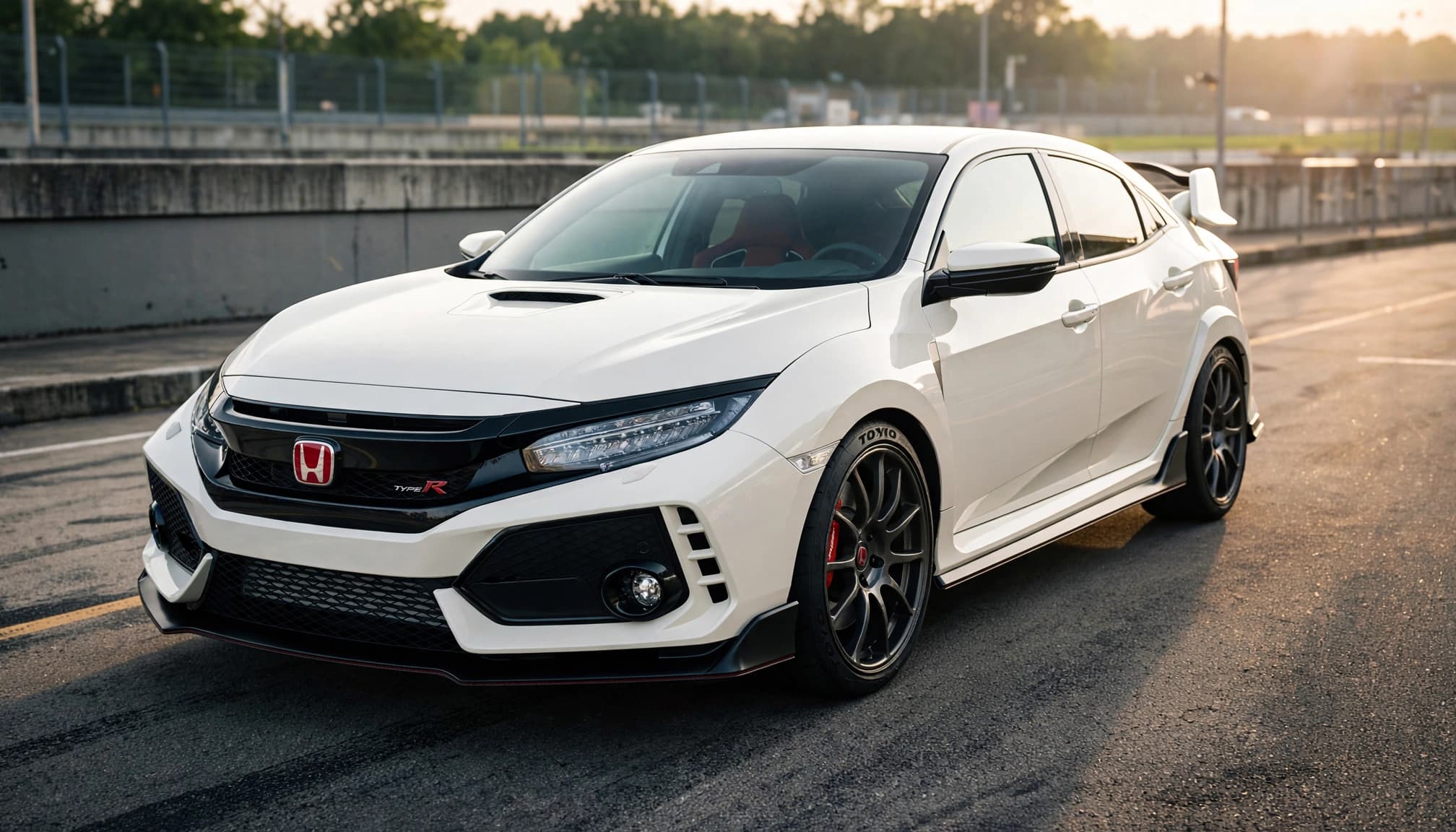
The RR is the more specialized dry-track choice. Toyo describes it as race-ready, with shallow tread intended to deliver consistent lap times and predictable handling on a dry circuit.
That makes it appealing for an experienced Type R driver who has a separate wheel set and spends most of each event chasing repeatable laps. Its intended use also fits a car that arrives on a trailer and stays off public roads on the competition tires.
However, a more track-focused design doesn't establish a guaranteed lap-time advantage on every Civic. Tire size, alignment, pressure, surface conditions, and driver inputs all affect the result.
The R888R is also built for serious dry driving. Toyo says its tread design and contact patch put more rubber on the track than its predecessor. Its competition positioning makes it a sensible option when you want a dedicated track tire without choosing the RR's narrower race-focused use case.
On a front-wheel-drive Type R, the front tires handle steering, braking, and power delivery. Both models need a setup that keeps those tires working evenly across a session. More grip at the start of a lap won't help much if the fronts become too hot later.
Cold competition tires won't necessarily deliver their best grip as soon as you leave pit lane. Start with controlled acceleration and braking, then increase cornering load as the tires come up to temperature.
That approach applies to both the R888R and RR. Don't assume the RR needs a fixed number of warm-up laps, or that the R888R will always reach its working temperature first. Track temperature, pace, and session length change the outcome.
The front tires can gain heat quickly when a Civic is asked to brake hard, turn, and accelerate out of the same corner. If the car begins to push wide during a session, reduce the load and give the front tires a chance to recover.
Smooth inputs help you judge the change in grip. A cooldown lap at reduced speed also gives the tires and brakes a gentler end to the session than an abrupt stop after a fast lap.
A heat cycle is a period of use that brings a tire up to temperature, followed by cooling. Competition tires can lose some of their performance through repeated heating and cooling even when visible tread remains.
Neither tire has a published heat-cycle count that predicts when it will slow down on your Type R. Driving style and the demands of each session make a simple number unreliable.
Keep a record of track days, session lengths, pressures, and changes in handling. That gives you a more useful picture than judging life by tread depth alone.
If the car takes longer to produce grip or becomes less consistent under the same conditions, the tires may be aging. On the other hand, a change in pressure or alignment can produce similar symptoms, so consider the whole setup before blaming the compound.
For drivers comparing the R888R and RR, the practical point is to budget for performance to change over time. Don't buy either tire expecting a guaranteed number of fast sessions.
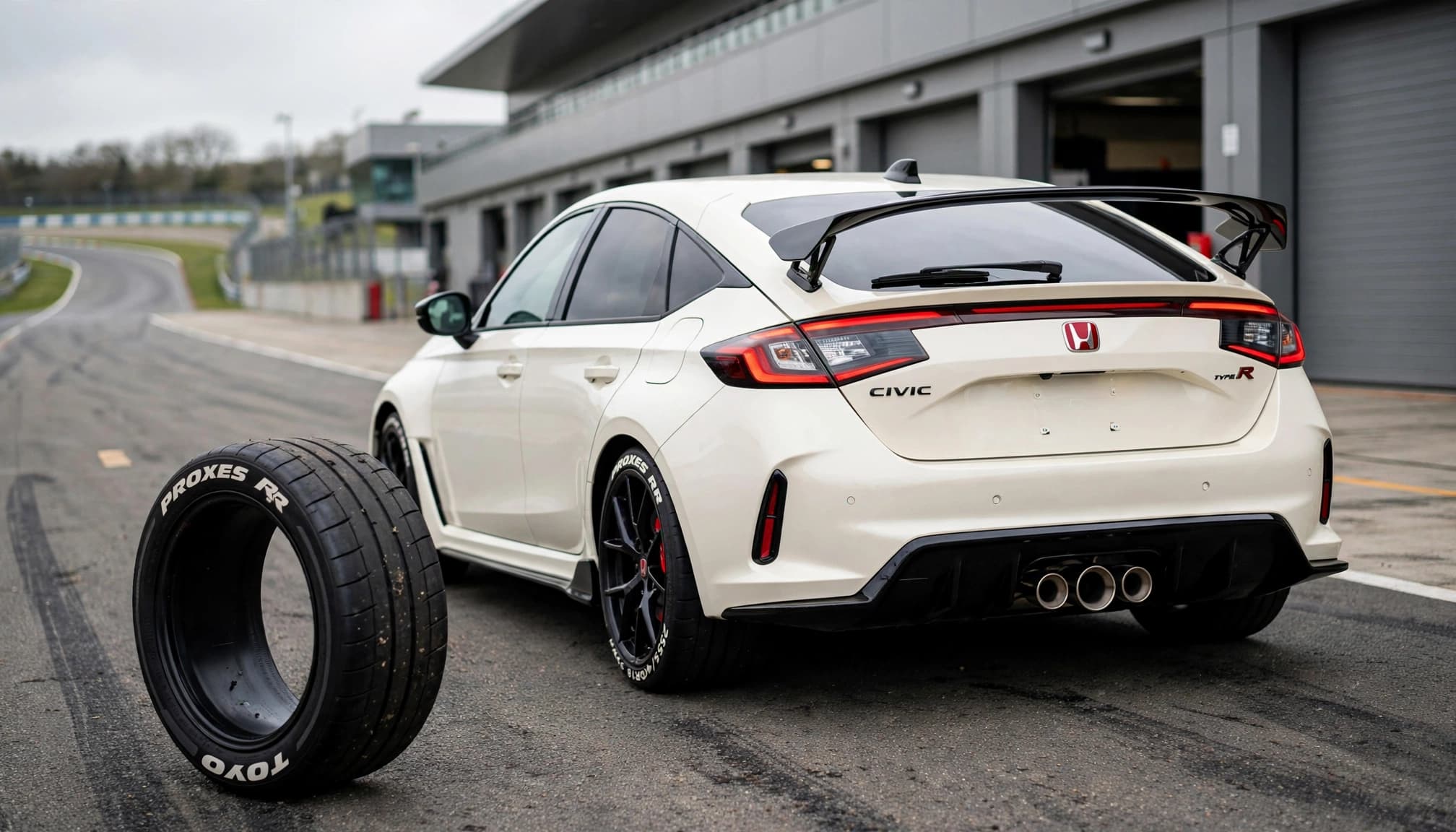
Toyo describes the RR as having 4/32 inch of tread depth, although some individual size listings show 3.7/32 inch. For comparison, one listed R888R size, 235/40ZR18, has 6.3/32 inch of tread.
Those figures describe different listings, not a controlled durability test. The RR's shallow starting depth does mean there's less visible tread to work with at the outset. It doesn't establish how many track days either tire will last.
Toyo's R888R launch information lists a 100 AA A UTQG rating. Treat that number as a product specification rather than a promise of mileage or track life.
A Type R's front tires carry a heavy workload. Repeated hard cornering can wear the outer shoulders, particularly if the alignment and pressures don't suit track use.
Look across the full tread after sessions, not only at the center. Uneven shoulder wear is a reason to review the setup before fitting another expensive set of tires. Suspension changes can help tailor the car to track use; our Ohlins Civic Type R track coilovers are one option for FK8 and FL5 builds.
The RR's shallow tread and race-focused design make it a poor choice when standing water enters the picture. Toyo says the tire isn't for highway use, so a separate road tire setup or vehicle transport is part of the plan.
The R888R has more tread depth in the size example above, but that doesn't make it a dedicated rain tire. Standing water can overwhelm a competition tire's ability to clear water, particularly at speed. Cold conditions add another variable because the tire may struggle to generate heat.
For a track day with a wet forecast, bring a suitable wet-weather tire setup or be prepared to sit out affected sessions. Follow the event organizer's instructions if conditions deteriorate. If you plan to drive the Civic home, make that decision before you arrive at the track.
The 2025 Civic Type R owner's specifications list a 265/30ZR19 tire on a 19-by-9.5-inch wheel. That gives you a useful reference point for the car's original setup, but an aftermarket track wheel may have different dimensions.
Toyo lists its R888R in 235/40ZR18 with an approved wheel-width range of 8.0 to 9.5 inches. That is a tire specification, not a guarantee that the size fits a particular Civic Type R wheel and suspension combination.
A wider tire isn't automatically faster. It needs an appropriate wheel width and room to move through steering and suspension travel. Overall diameter also matters because it changes the available clearance and the tire's relationship to gearing and speedometer readings.
The FK8 and FL5 have large front brakes. A wheel's diameter, barrel shape, and spoke design all affect caliper clearance. Offset also changes where the wheel sits relative to the suspension and fender.
Lowered cars need enough clearance under compression as well as when parked. Our look at Civic Type R wheel strength and fitment covers wheel considerations beyond appearance.
Choose the tire and wheel as a package. A size that looks attractive on paper offers little benefit if the wheel doesn't clear the brakes or the tire contacts the bodywork under load.
Choose the R888R if your Type R sees occasional track days and you want a competition-oriented tire with a less specialized starting point than the RR. It suits drivers who value strong dry-track performance but aren't building their entire setup around a race tire.
Choose the RR if your priority is dry-circuit use, you have a suitable wheel and tire combination, and you can keep the tires off public roads. It makes the most sense when the car and driver are prepared for a focused track setup.
For either choice, factor in a separate wet-weather plan. Tire purchase price is only one part of the cost: mounting, wear, alignment, and transport can matter just as much over a season.
Toyo describes the RR as a DOT competition tire, but also says it's for racing purposes only and not for highway use. Plan to transport the car or use a separate road tire setup.
There's no reliable published track-life figure for either tire on the Civic Type R. The RR starts with shallower tread, while alignment, track surface, temperature, and driving style affect wear on both.
No. Toyo identifies the Proxes R as a successor to the Proxes RR. The R888R is a separate competition tire in the Proxes range.
The R888R is the more practical starting point for many Civic Type R track-day builds. The RR is the more focused option for dry-track driving when road use is out of the plan.
Whichever tire you choose, pay attention to fitment and tire condition throughout the season. A well-matched setup you can use safely is more valuable than a tire chosen on grip alone.